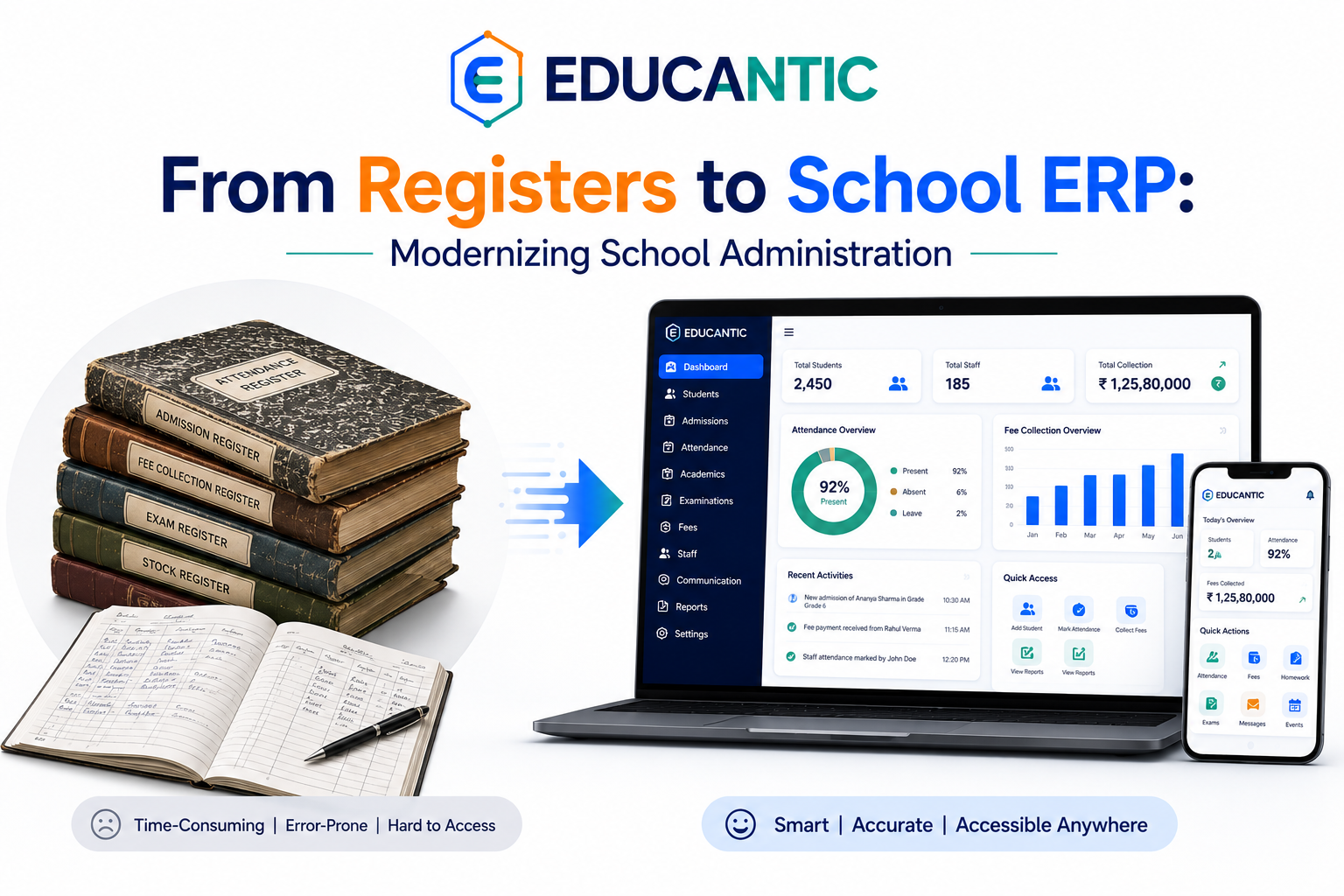
A practical guide to replacing manual workflows with connected, measurable and scalable digital processes.
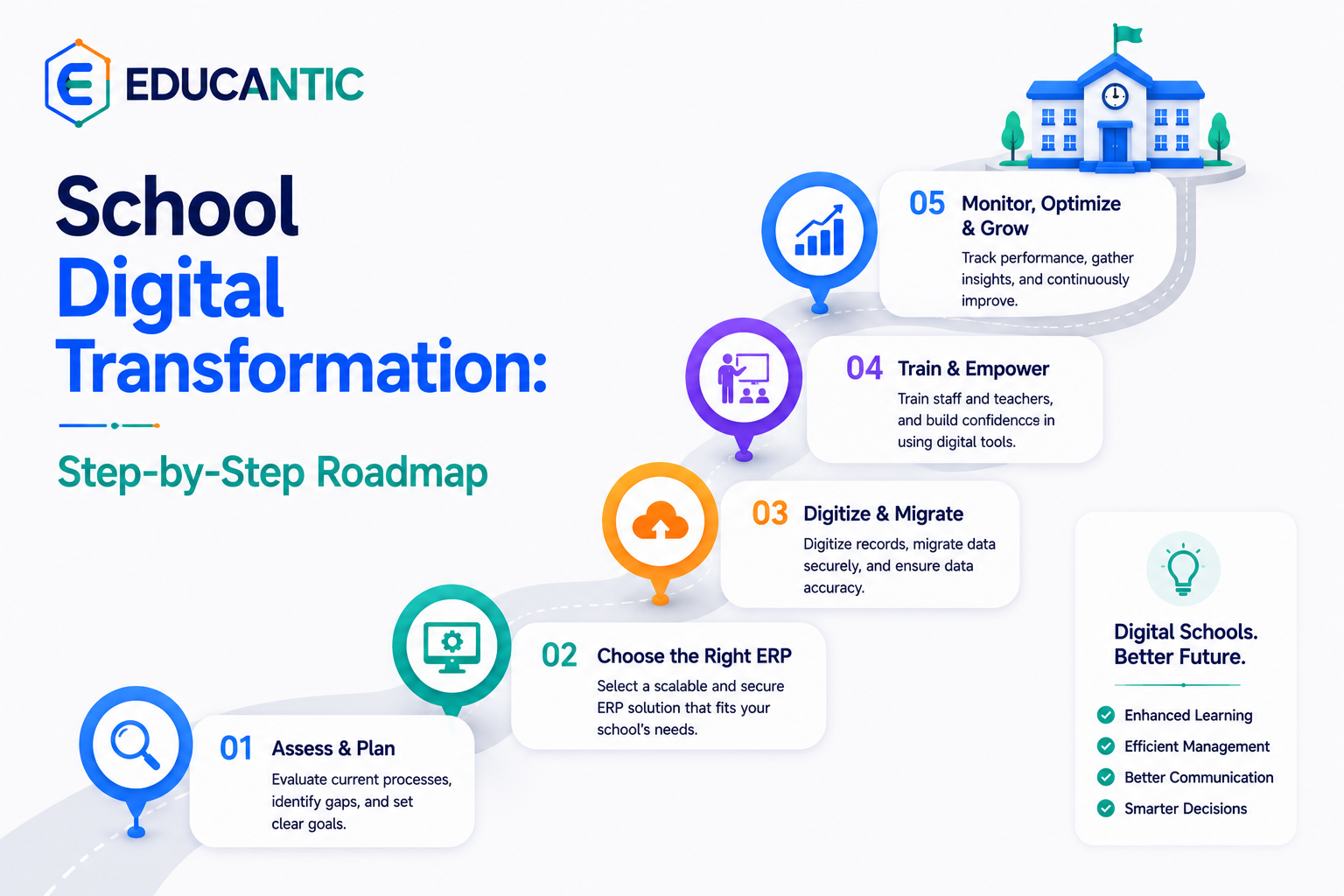
explains moving school administration from fragmented manual processes toward connected digital workflows. For Indian schools and educational institutions, the objective is to make everyday work more organized, measurable and accessible without adding unnecessary complexity.
Why This Matters for Schools
Schools manage connected activities every day. When information is spread across registers, spreadsheets, messaging tools and separate applications, staff may spend unnecessary time entering, checking and sharing the same information. A connected workflow can improve consistency and give authorized users faster access to relevant information.
The right approach is not simply to replace paper with software. Schools should first understand their current process, define responsibilities, protect sensitive information and choose workflows that solve real operational problems.
Key Areas to Consider
- Process mapping
- Centralized records
- Workflow automation
- Role-based access
- Staff training
- Continuous improvement
Practical Implementation Steps
- Map the existing workflow: document how information is created, approved, updated and reported.
- Prioritize high-volume work: begin with processes that consume significant staff time or create frequent errors.
- Prepare reliable data: clean duplicate or outdated records before migration where required.
- Define permissions: give each user role only the access required for their responsibilities.
- Train users: provide practical guidance so the system becomes part of everyday work.
- Review results: use reports and feedback to improve processes after implementation.
How Educantic Can Help
Educantic brings school management workflows such as students, admissions, academics, attendance, examinations, fees, communication, HR and payroll, transport and reporting into a connected platform. Explore the School ERP features and education solutions to see how the platform can fit different institutional requirements.
Frequently Asked Questions
What is school digital transformation?
It is the structured adoption of digital systems and processes to improve school operations and services.
How should schools move from registers to ERP?
Map processes, clean data, prioritize high-value workflows, train users and expand in stages.
What makes digital transformation successful?
Clear goals, reliable data, appropriate software, user adoption and continuous measurement are important.
Explore Educantic
Read more school management resources, review the frequently asked questions, or contact Educantic to discuss your institution requirements and request a demo.